
Suspension
Suspension corrosion: surface rust, or a bigger repair?
What it means
Rust was found on part of the suspension — an arm, a subframe, a mounting. "Corroded but not seriously weakened" means the tester saw it and judged that the part hadn't lost enough strength to fail on that day.
The real question isn't how rusty it looks. It's whether this is surface corrosion on sound metal or metal that's actually going. The repair depends on the condition of the metal, not just its colour. DVSA's assessment is about loss of metal thickness, holes and splits rather than appearance, which is why rust colour on its own answers nothing. Get a garage to inspect the part named in the entry and show you what they found.
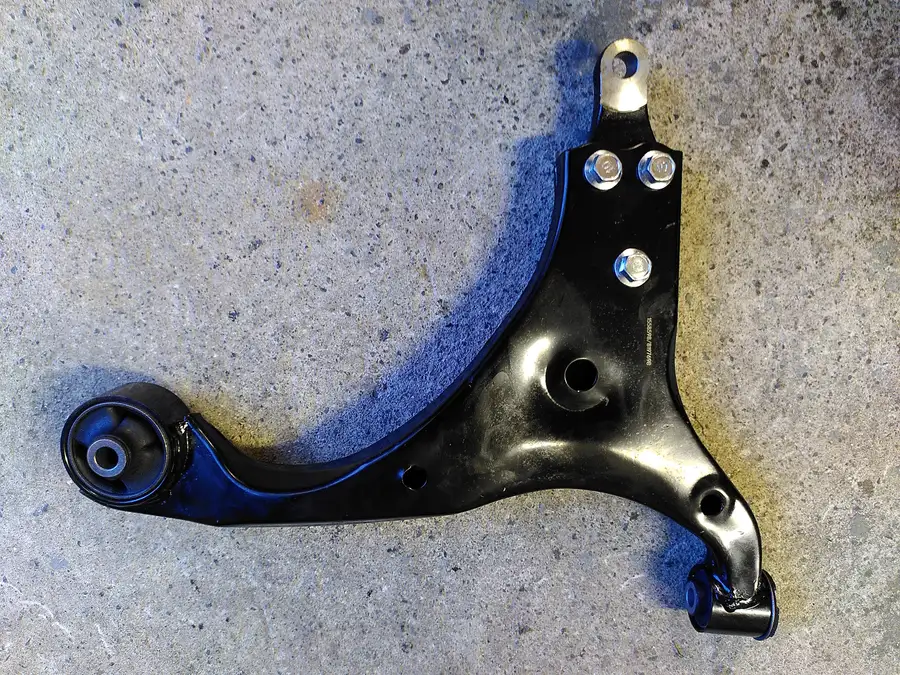
Reference arm. A continuous metal surface, without the obvious holes in the corroded example. Different vehicles—not a before-and-after pair.
Photo: Track control arm for a Kia Ceed 02 — So9q / Wikimedia Commons · CC BY-SA 4.0. Converted for display.

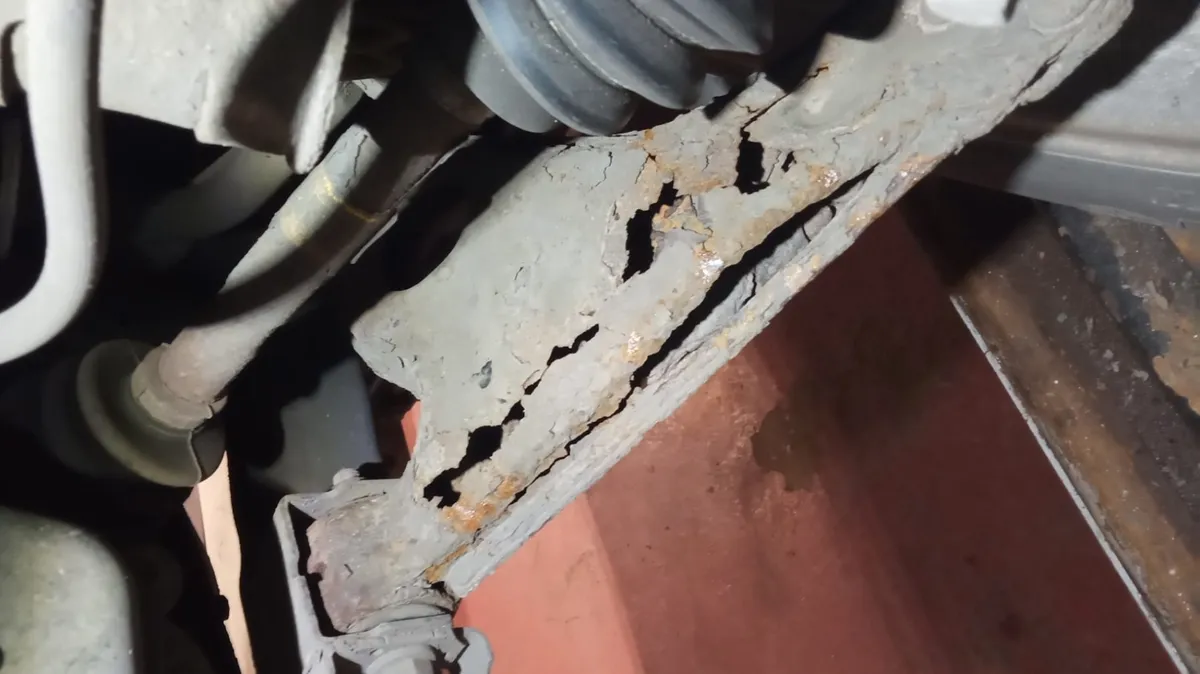
Severe corrosion. Holes, flaking metal and splitting in a Meriva lower arm, photographed for DVSA. This is an extreme example, not what every corrosion advisory looks like.
Photo: DVSA / Matters of Testing · Open Government Licence v3.0. Converted for display.
Why it happened
Road dirt, salt and water collect in hollow box sections and on upward-facing surfaces, and sit there. That's how you get heavy corrosion in one concentrated spot while the rest of the car looks fine, often somewhere awkward to see. The inspection manual flags these corrosion-prone designs for exactly that reason.
An older car can have several rusty components, and it's tempting to lump them together as "the underside's rotten". Don't. A corroded arm, a corroded subframe and rust in the bodywork around a suspension mounting are three different findings with three very different bills.
What it costs
There's no useful range for this one, and anyone quoting you one hasn't seen the car. Replacing a pair of front arms is a few hundred pounds. A subframe, or welding, is a different order of money. Corrosion treatment might be fifty quid or pointless, depending on what's left of the metal. Get it inspected, then get a quote naming the part, whether the replacement is new or used, labour, alignment and VAT. This is the finding where buyers most often negotiate a number out of thin air and then find the real job is three times that.
If you're buying the car
Ask for a lift inspection and photos of the part named in the MOT — not just a general shot of the underside.
Ask the direct question: is the metal sound, does it need treating, or does it need replacing? Have the garage explain the condition and what work, if any, is needed.
If the seller says it was "treated", ask what was done and whether there are before-and-after photos. A coat of underseal is not evidence that weakened metal has been restored, and it hides what's underneath.
If the record shows a failure, ask for the repair invoice and read the next test. An outstanding failure nobody can explain is a reason to stop, not to haggle.
The MOT wording
Section 5.3.3 and Appendix A set out how corrosion is judged. Highly stressed components are rejected for serious loss of thickness, holes or splits, and welded repairs to them aren't normally acceptable, with limited exceptions.
| What you'll see | What it means |
|---|---|
| Advisory: corroded but not seriously weakened | This item alone does not fail the MOT. Monitor and repair if necessary — not a promise about how long the part will last. |
| Major: excessively damaged or corroded | Failed. Repair immediately. |
| Dangerous: fractured, or likely to fail | Failed. Don't drive it until it's repaired. |
DVSA's category instructions. Great Britain categories; Northern Ireland uses the DVA manual.
What this page can't tell you
No photo establishes remaining metal thickness or what's corroding inside a box section. An old pass doesn't prove the part is sound now, and neither does a missing later advisory. This is a guide to the record, not a diagnosis, and it hasn't been reviewed by a mechanic.
Next
Check a car with Lemoned to see which component was named at each test, so you can tell one recurring problem from several separate ones. Also see broken coil springs.
Spotted an error? Email hello@lemoned.co.uk with the passage and the source that contradicts it.